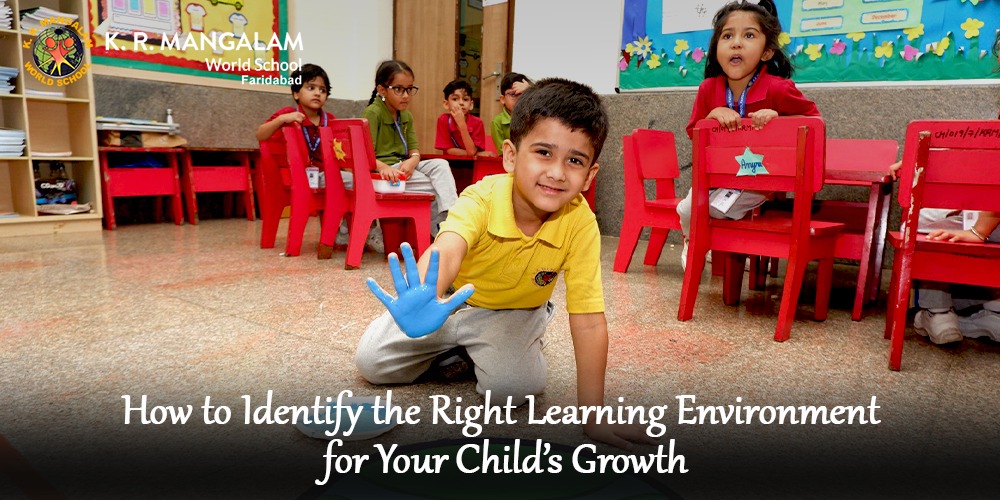
How to Identify the Right Learning Environment for Your Child’s Growth
Introduction:
Choosing a school is one of the most important decisions parents make — it’s not just about where their child will study for a few years, but about laying the foundation for their future: academically, socially, emotionally. At K R Mangalam World School, the Top CBSE Schools in Faridabad where a “right learning environment” does more than offer good marks: it nurtures character, builds confidence, encourages curiosity, and supports holistic growth.
A premium school — one that combines quality academics, supportive faculty, modern infrastructure, and opportunities for extracurricular growth — acts as a launchpad for children to explore, learn, and thrive. KRM exemplifies such an institution: a space where children can grow not just as students, but as well-rounded individuals equipped for life.
About Us:
When parents look for the right school for their child’s growth, they seek a place that nurtures intellect, character, creativity and confidence — exactly what K.R. Mangalam World School, Faridabad delivers. A supportive and well‑structured academic framework, delivered by committed and caring teachers, ensures that each child receives personalized attention and the foundation for lifelong learning. Coupled with modern infrastructure — smart classrooms, well‑equipped laboratories, a rich library, safe and comfortable surroundings — the school provides an ideal environment for learning. But just as crucial is the opportunity for holistic growth: at KRMWS Faridabad, students can explore sports, music, dance, art, drama, clubs, and many co‑curricular activities that help them discover their passions, build confidence, develop social skills and grow emotionally. Such a balanced and nurturing setting not only promotes academic success — it fosters overall development, making KRMWS Faridabad a place where children can truly flourish.
What Makes a “Right Learning Environment”: Key Pillars to Look For
When evaluating potential schools, whether KRM or any other top CBSE‑affiliated institution, some key pillars consistently emerge as indicators of a supportive, growth‑oriented environment. These pillars encompass academics, infrastructure, culture, teaching methodology, and more.
1. Strong & Balanced Academic Framework
At the core, academics remain essential. A right school ensures that the curriculum — often the one provided by Central Board of Secondary Education (CBSE) — is delivered in a way that builds conceptual clarity, critical thinking, and application-oriented learning, rather than rote memorization.
Key elements to check:
- Consistent academic performance and track record: Board exam results, student achievements, and alumni success.
- Curriculum delivery that supports understanding: teachers who explain concepts well, encourage questions, and foster analytical thinking — not just exam‑oriented cramming.
- Flexibility for different learning styles: some children may respond to theory-based teaching, others thrive with projects or experiential learning. A good school accommodates these variations.
Choosing such a school gives your child a strong scholastic foundation while keeping their future options — competitive exams, higher studies, or diversified career paths — open.
2. Qualified, Committed & Empathetic Faculty
Teachers are the backbone of any school. Even excellent infrastructure and curriculum cannot make up for weak teaching. Several top CBSE‑school guides highlight faculty quality as pivotal: well‑qualified, experienced educators who use modern pedagogy and create a student‑friendly environment.
When assessing a school, try to evaluate:
- Teacher qualifications and training in CBSE pedagogy.
- Whether teachers encourage curiosity, participation, and confidence rather than just enforce discipline and rote learning.
- Teacher‑student ratio or class size: smaller or balanced classes allow more individual attention, which helps children who need guidance or those who want to explore beyond textbooks.
A good teacher can shape a child’s thinking, nurture their potential, and make learning enjoyable and meaningful.
3. Infrastructure & Facilities that Encourage Holistic Learning
Learning isn’t confined to classrooms. A school’s physical environment — labs, libraries, sports grounds, art and music rooms, digital resources — plays a huge role in enabling diverse forms of learning and growth.
Essential aspects to check include:
- Well-equipped science and computer labs for practical, hands-on learning.
- Spacious, clean classrooms; access to libraries or reading spaces; digital tools or smart classrooms if possible.
- Sports, arts, music, drama — facilities to explore extracurricular interests. This helps develop physical fitness, creativity, teamwork, discipline, and other life skills.
Such infrastructure ensures that children aren’t limited to academics only: they get opportunities to explore, experiment, express, and grow in varied ways.
4. Emphasis on Holistic Development: Co‑curricular & Extracurricular Integration
A “right environment” recognizes that education isn’t just about scoring marks. Great schools embed co‑curricular and extracurricular activities — arts, sports, clubs, social service, leadership initiatives — into their ecosystem to foster all‑round development.
Benefits of a holistic school environment:
- Students discover and nurture their latent talents and interests — be it in music, arts, sports, debate, or innovation.
- They develop soft skills: teamwork, leadership, communication, time management, empathy, discipline.
- They learn to balance academics with fun, relaxation, and creative expression — which helps mental well‑being and avoids burnout.
- Exposure to diverse activities helps shape a well‑rounded personality, not just an academic achiever.
When evaluating a school, check if extracurriculars are treated as optional add-ons — or if they’re integrated as part of the regular lifecycle of school. The latter usually signals a more balanced, child‑centred approach.
5. Safe, Caring, and Supportive School Culture
Safety, well‑being, and emotional support are critical components of a right learning environment. A child should feel secure — physically, emotionally — to learn, explore, and express themselves. Many guides stress school safety, transparent communication, and parental involvement as key factors.
Elements to consider:
- Proper infrastructure for safety (well‑maintained campus, clean facilities, security protocols, emergency preparedness).
- Transparent and regular communication between school and parents: updates on academic progress, behavioural feedback, parent‑teacher meetings, open dialogue.
- A nurturing, inclusive environment where children from different backgrounds feel accepted; a culture that values respect, empathy, discipline, and moral values.
A school with a positive culture helps children feel comfortable, confident, and motivated — all essential for personal growth and learning.
6. Opportunities for Leadership, Innovation & Student Voice
Beyond academics and standard extracurriculars, a good school gives students space to lead — in clubs, student councils, projects, innovation labs, or creative initiatives. This helps children learn responsibility, creativity, problem‑solving, collaboration, and leadership — skills valued in higher education and life.
While assessing schools, watch out for:
- Existence of student leadership bodies (student council, clubs, committees, peer mentoring).
- Platforms for students to express ideas — school magazines, events, project work, exhibitions — not just passive learning.
- Encouragement for innovation, creativity, and independent thinking — not only academic reproduction.
Such opportunities help shape confident, independent thinkers — children who can lead, adapt, and create.
7. Transparency, Feedback Mechanisms & Parental Involvement
A school should foster trust and collaboration between educators, students, and parents. Transparent communication, regular feedback, and an inclusive environment where parents are involved meaningfully helps ensure that a child’s growth is supported both at school and at home.
What to look out for:
- Regular parent‑teacher meetings, updates on academic and co‑curricular performance, and open channels for feedback and concern.
- School policies that value emotional well‑being, counselling facilities (especially for older children), and support during stressful periods.
- A transparent admission process, clarity about fees, activities, assessments — avoiding hidden costs or opaque practices.
This partnership between school and parents ensures that children receive consistent support, and parents stay informed about their growth — academically and emotionally.
How K.R. Mangalam World School Reflects These Pillars — Why It’s a Strong Example
Based on what makes a school ideal (as above), KRM stands out as an institution that reflects many of these strengths. Here’s how KRM (and schools like it) align with those pillars:
Balanced Academic Program With Focus on Conceptual Clarity & Growth
KRM follows a structured curriculum that emphasises conceptual clarity — ensuring students build strong foundational knowledge, not just rote learning. In line with what experts flag as important for CBSE schools, the teaching methodology encourages analytical thinking and understanding over memorization.
This academic environment empowers students to not only perform well in board exams but also to be prepared for future challenges — higher studies, competitions, or career demands.
Diverse Infrastructure & Facilities to Support Learning
To support a holistic educational experience, KRM offers — or strives to offer — facilities beyond textbooks: labs, activity rooms, arts and athletics options, spaces for creativity, and a supportive campus environment.
Such infrastructure ensures that children have access to varied experiences: from science experiments to arts, from sports to creative projects — helping their overall growth.
Emphasis on Co‑curricular & Extracurricular Activities for All‑Round Development
KRM recognises the importance of extracurriculars: students are given opportunities to participate in sports, arts, clubs, cultural events, and more. This helps children explore their interests, build confidence, teamwork, creativity, leadership — qualities beyond academics that are essential for personal growth.
By integrating such activities rather than treating them as side‑events, KRM ensures balanced overall development.
Supportive, Value‑Based, Inclusive School Culture
A learning environment at KRM aims to nurture not just academic success but moral values, empathy, discipline, emotional stability. Through a supportive student‑teacher community, inclusive policies, and emphasis on character building, the school fosters growth in personality and values — not just grades.
This helps students become not only good learners, but good human beings: empathetic, responsible, socially aware, and confident.
Opportunities for Leadership, Creativity & Student Initiative
KRM offers platforms for students to lead — through clubs, house systems, inter‑class competitions, projects, creative events. Such opportunities encourage responsibility, initiative, innovation, and confidence.
Students learn to express themselves, take decisions, work collaboratively, and grow as independent thinkers — traits that help them in higher education and life beyond school.
Transparent Communication, Parental Involvement & Well‑being Focus
Recognizing that child growth is a shared journey, KRM — like many top CBSE‑oriented institutions — facilitates communication with parents: providing updates, feedback, involving them in events, and ensuring emotional and academic support for students.
Such an environment helps children feel secure and supported, and parents stay informed and engaged, creating a nurturing ecosystem for growth.
Practical Steps for Parents & Students: How to Evaluate a School Before Enrolling
When you shortlist schools for your child — whether it’s KRM or some other institution — here’s a step‑by‑step checklist to help you evaluate whether it’s the “right environment.”
- Visit the Campus (or Plan a Virtual Tour): See the classrooms, labs, sports/arts facilities; observe cleanliness, safety, and student engagement. Talk to staff, observe the environment.
- Check Academic Track Record & Curriculum Delivery: Review past exam results, ask about teaching methodology, concept-learning vs rote‑learning balance, and how the school supports different learning styles.
- Meet Teachers, Assess Faculty Quality: Ask about teacher qualifications, experience, attitude toward students, whether they encourage curiosity, individuality, and holistic growth.
- Observe Infrastructure & Extracurricular Options: Check if labs, library, sports, arts, clubs are available; whether they are actively used; if students are engaged beyond academics.
- Understand School Culture & Values: Talk to current students and parents, get feedback about inclusivity, teacher‑student relationships, discipline, support, emotional well‑being and growth opportunities.
- Check for Leadership, Innovation & Student Voice Platforms: Are there student clubs, councils, opportunities for projects, leadership roles? Do students get to express themselves and take initiative?
- Evaluate Communication & Parental Involvement Practices: Does the school have regular parent‑teacher meetings, transparent feedback system, channels for dialogue, updates, and support?
- Consider Practicalities: Location, Commute, Fees & Transparency: Long commutes, hidden costs, unclear fee structure can affect child’s comfort, energy levels, and overall experience. Schools that are open about such details are a better bet.
- Align with Child’s Strengths, Learning Style & Aspirations: Every child is unique. Consider their strengths (academics, arts, sports), interests, temperament — pick a school that supports and nurtures those.
- Seek Feedback from Current Students / Alumni & Parents: First‑hand experiences can reveal a lot about school culture, management, support system, and actual opportunities beyond marketing claims.
Using this checklist helps you make an informed, child-centered decision — ensuring the school you pick supports not just academic success, but personal growth, happiness, and future readiness.
Why the “Right Fit” Matters: Long-Term Impact on Student’s Growth & Happiness
Selecting the right learning environment isn’t just a short-term decision; it’s foundational for a child’s long-term development. Here’s why getting this right matters:
- Strong Academic Foundation + Critical Thinking: With quality teaching and conceptual learning — children build analytical skills that help in higher studies, competitive exams, and lifelong learning.
- Well‑Rounded Personality: Exposure to sports, arts, clubs — helps children become confident, creative, disciplined, socially aware, and emotionally balanced.
- Emotional & Social Well‑being: A supportive, inclusive environment fosters emotional security, self-esteem, resilience, and social skills.
- Discovering & Nurturing Talents: Children get opportunities to explore their interests — be it science, arts, sports, or leadership — and nurture their unique talents.
- Leadership, Initiative, and Adaptability: Through student‑led activities, leadership roles — they develop responsibility, initiative, collaboration, adaptability — skills vital for future success.
- Parent–School Partnership: With transparent communication and support — parents stay involved, child’s progress stays tracked, and issues (academic or personal) get timely attention.
- Better Future Outcomes: A child growing in such an environment is more likely to succeed academically, choose a fulfilling career path, adapt to changes, engage socially, and grow into a balanced individual.
Thus, the right school becomes more than an institution — it becomes a supportive space that shapes a child’s life, values, growth, and future.
Common Mistakes to Avoid — What “Looks Good” Might Hide
While evaluating schools, parents often fall prey to marketing or reputational hype. Here are common pitfalls — and how to avoid them:
- Focusing only on academic results: Good board results matter, but don’t guarantee holistic growth or a supportive environment. A school might push students for marks but neglect extracurriculars, mental health, or personality growth.
- Ignoring infrastructure & extracurricular facilities: Attractively designed brochures may hide lack of real resources — empty labs, non-functional sports areas, limited arts/music infrastructure. Always verify in person.
- Neglecting teacher quality and student‑teacher ratio: Big schools with many students may promise excellence but may not be able to give individual attention — which matters especially for early years or for children who need support.
- Overlooking emotional and social environment: A rigid, over‑competitive culture can hamper self-esteem, creativity, and happiness. Look for warmth, camaraderie, support, and inclusivity.
- Neglecting a child’s individuality: Forcing a child into a “prestigious” school even when their interests, temperament or learning style might not align can lead to stress, demotivation. Always match the school to the child’s personality.
- Ignoring parent‑school communication & transparency: Hidden costs, lack of clarity on extra‑curricular offerings, opaque communication — these issues can cause stress later.
Avoiding these pitfalls and taking a balanced, informed approach helps ensure that the school you choose truly supports your child’s growth — not just academically, but as a person.
Conclusion:
Finding the right learning environment for your child isn’t just about boarding a “top school” or chasing grades. It’s about finding a space where your child’s strengths are recognised, their curiosity nurtured, their emotions supported, and their potential allowed to flourish.
Schools like KRM — which combine academic strength, quality faculty, infrastructure, holistic development opportunities, value-based culture, and support — exemplify what the “right school environment” should aim to be.
As parents and individuals invested in a child’s future, it is vital to look beyond rankings and marketing — to visit campuses, talk to teachers and parents, observe culture, and evaluate fit based on your child’s personality, interests and needs.
FAQs:
Q. 1 How do I know if KRM is the right learning environment for my child?
Ans : KRM provides a balanced curriculum, strong emotional support, and ample extracurricular opportunities, fostering both academic and personal growth.
Q. 2 What makes a school’s environment conducive to student success?
Ans :Look for a school with modern infrastructure, caring faculty, extracurricular diversity, and a focus on holistic growth — all of which KRM offers.
Q. 3 How can extracurriculars enhance my child’s development?
Ans : Extracurricular activities help build leadership, creativity, teamwork, and confidence, all essential for personal growth — as seen in KRM’s offerings.
Q. 4 Why is emotional support important in a child’s education?
Ans : Emotional well-being helps children manage stress, build resilience, and form strong relationships, something KRM integrates into its approach.
Q. 5 How does KRM provide a supportive environment for growth?
Ans : KRM fosters a nurturing, inclusive culture where students receive personalized attention and are encouraged to explore their full potential.
Q. 6 What facilities should I expect from a school to support my child’s growth?
Ans : Look for schools with well-equipped classrooms, labs, sports grounds, arts spaces, and a focus on overall development, which KRM excels at.