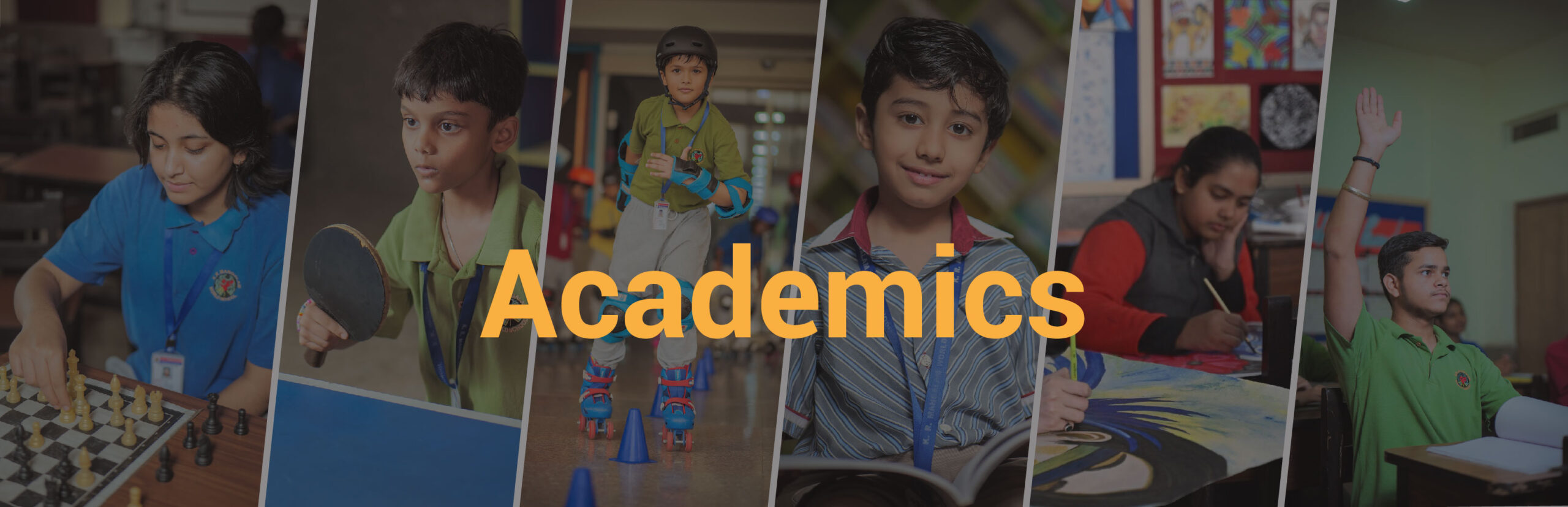
At K. R. Mangalam World School, Faridabad, the Foundation Stage Curriculum, based on the National Curriculum Framework (NCF) 2020, lays a strong foundation for the lifelong learning journey of our young learners. This curriculum is designed to cater to the developmental needs of children in the early years, offering a rich, engaging, and holistic approach that nurtures their social, emotional, cognitive, and physical growth. Our goal is to provide a safe, stimulating, and supportive environment where children can explore, discover, and develop their innate potential.
Emphasis on Holistic Development
Aligned with the NCF 2020, the Foundation Stage Curriculum focuses on fostering a child’s overall development rather than just academic skills. It recognizes that early education is about shaping the emotional, social, cognitive, and physical well-being of children. The curriculum at K. R. Mangalam World School integrates the following core areas:
Child-Centered Learning
The Foundation Stage Curriculum at our school is deeply rooted in the principles of child-centered education, as outlined in the NCF 2020. The focus is on creating a learning environment that is responsive to the needs, interests, and pace of each child. Teachers act as facilitators, guiding children through a variety of hands-on, real-world experiences that stimulate their curiosity and enthusiasm for learning.
Learning at K. R. Mangalam World School is not confined to traditional classroom settings. The use of outdoor spaces, sensory areas, and learning corners encourages children to explore and experiment, fostering an active and inquiry-based learning approach. Classrooms are designed to be interactive, with materials and resources that promote independent and collaborative learning.
Incorporating 21st Century Skills
The NCF 2020 highlights the importance of equipping children with skills needed to thrive in a rapidly changing world. At K. R. Mangalam World School, we integrate 21st-century skills such as critical thinking, collaboration, creativity, and communication into the Foundation Stage Curriculum. These skills are developed through group projects, problem-solving activities, and interactive learning experiences that encourage children to work together and think critically.
Focus on Inclusivity
Our Foundation Stage Curriculum reflects the inclusive values of the NCF 2020, ensuring that every child, regardless of their background or abilities, has access to high-quality education. The curriculum is designed to be flexible, meeting the needs of diverse learners and accommodating children with special educational needs. Differentiated instruction, personalized learning plans, and a supportive learning environment ensure that every child has the opportunity to succeed.
Assessment and Feedback
At K. R. Mangalam World School, we believe that assessment in the Foundation Stage should be holistic and continuous. We focus on observing and documenting children’s progress in a manner that highlights their strengths and areas for development. Teachers conduct formative assessments through observation, interaction, and feedback, ensuring that the child’s learning journey is tracked and supported in a meaningful way.
Conclusion
The Foundation Stage Curriculum at K. R. Mangalam World School is not just about laying the groundwork for academic success, but about fostering well-rounded individuals who are curious, confident, and capable. By following the principles of the NCF 2020, we ensure that our young learners are equipped with the skills, knowledge, and values needed to thrive in an ever-changing world. Through this approach, we provide a strong, supportive foundation that will help our children grow into lifelong learners and responsible global citizens.

The Six Transdisciplinary themes capture human commonalities that are significant and relevant across cultures, geographic regions and student learning stages.

Aligned with the NEP 2020, the curriculum focuses on developing essential skills, values, and a love for lifelong learning.

Resilience, empathy, and self-awareness in every child

CBSE-trained teachers who bring expertise and passion to the classroom.

Designed to enhance learning in a modern, inspiring setting.

Hands-on experiences that provide global perspectives and broaden horizons.