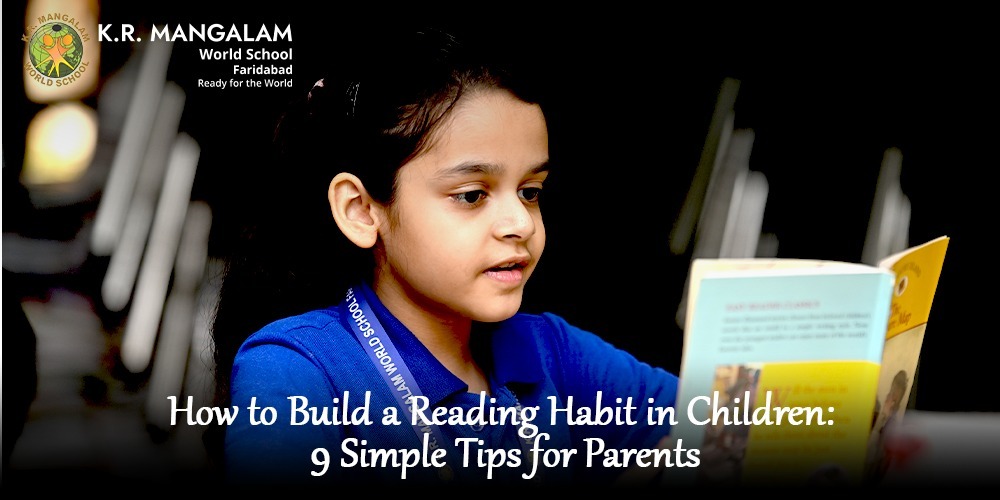
How to Build a Reading Habit in Children: 9 Simple Tips for Parents
You buy a beautiful new storybook, place it on your child’s bedside table, and a week later it is still there, unopened, under a pile of toys. Ask about it, and you hear: “Reading is boring.” In a world of fast videos and games, a book can feel slow to a child. But a love of reading is not something children are simply born with. It is a habit, and habits can be built.
We at K.R. Mangalam World School, Faridabad, widely regarded as one of the top schools in Faridabad, know how much reading shapes a child’s vocabulary, imagination, and success in every subject. In this blog post, we share why some children resist books and nine simple ways to turn reading into something they enjoy. Read till the end.
Why Do Some Children Find Reading Boring?
Children usually avoid reading for a reason. The book may be too difficult, so every page feels like work. It may be about something they do not care about. Or reading may only ever appear as homework, so it feels like a chore rather than a treat. Find the reason, and the solution becomes much clearer.
9 Ways to Build a Reading Habit
-
Let Them Choose
Children read more when the book is their choice. Comics, joke books, animal facts, or sports stories all count. Fix: Take your child to a library or bookshop and let them pick, without judging the choice.
-
Match the Level
A book that is too hard breaks confidence. Fix: If your child struggles with more than a few words on a page, choose something simpler for reading alone and save harder books for reading together.
-
Read Aloud, Even to Older Children
Being read to is not just for toddlers. It builds vocabulary and makes stories exciting. Fix: read a chapter together at bedtime and stop at a cliffhanger, so your child wants to know what happens next.
-
Make a Daily Reading Slot
A short, regular time works better than long, occasional sessions. Fix: set aside 15 to 20 minutes a day, perhaps after dinner or before bed, when everyone in the family reads.
-
Be a Reading Role Model
Children copy what they see. Fix: let your child see you reading a book, newspaper, or magazine, and talk about what you are reading.
-
Create a Cosy Reading Corner
A special spot makes reading feel inviting. Fix: set up a corner with cushions, good light, and a small shelf of books within easy reach.
-
Connect Books With Their Interests
A child who loves cricket may enjoy a sports biography. One who loves space may devour a book about planets. Fix: link books to whatever your child is curious about this month.
-
Talk About Stories, Don’t Quiz
Questions like “What was the lesson?” turn reading into a test. Fix: ask “Which character did you like most?” or “What would you have done?” instead.
-
Celebrate Reading, Don’t Bribe It
Rewards like screen time for every chapter can make reading seem like a price to pay. Fix: celebrate milestones with a visit to the library or a new book of their choice.
Books for Every Age
- Ages 3 to 5: Picture books with bright illustrations, rhymes, and repetition
- Ages 6 to 8: Short chapter books, simple comics, and animal stories
- Ages 9 to 12: Adventure series, mysteries, fact books, and graphic novels
- Teenagers: Biographies, fantasy, real-life stories, and books linked to their hobbies
How We Nurture Young Readers at Our School
At K.R. Mangalam World School, Faridabad, we want children to see reading as a doorway to new worlds, not just a skill for exams. Here is how we encourage it:
- A welcoming library: Our library gives children a calm space to browse, discover new authors, and find books that match their interests.
- Stories brought to life: Our drama and theatre space lets children act out stories, which deepens understanding and makes characters memorable.
- Open learning spaces: Comfortable open learning spaces encourage children to read, discuss, and explore ideas together.
- Strong language foundations: Our Foundation and Primary Programmes build reading skills step by step, so that children gain confidence before moving on to longer texts.
- Support for every reader: Teachers track each child’s progress, and children who need extra help with reading receive it through our intervention spaces.
If you feel your child is struggling with reading, the class teacher can help you identify the right level of books to begin with.
Frequently Asked Questions (FAQs)
-
At what age should my child start reading independently?
Most children begin reading simple words between five and seven, but every child develops at their own pace. Keep reading together even after they begin reading alone.
-
Do comics and graphic novels count as reading?
Yes. They build vocabulary, imagination, and reading confidence, and they often lead children towards longer books over time.
-
How much should my child read every day?
For most school-going children, 15 to 30 minutes of daily reading is a good target. Regular reading matters more than long sessions.
-
Are e-books as good as printed books?
E-books can help, especially for older children, but printed books are free from distracting notifications and are often better for younger readers.
-
My child reads but doesn’t understand. What should I do?
Read together and pause to talk about what is happening in the story. If difficulties continue, speak to the class teacher, who can check whether extra reading support is needed.
Conclusion
A child who says “reading is boring” usually just has not found the right book yet. With the right choice, a daily routine, and a little encouragement, reading can become one of your child’s favourite parts of the day, and one of the most valuable habits they will ever build.
If you are looking for a school that nurtures curious, confident readers, we would love to hear from you. K.R. Mangalam World School, Faridabad, is listed among the top schools in Faridabad and offers a rich learning environment where a love for reading grows alongside strong academics.
To know more about our learning approach, feel free to make a campus visit or write to us at faridabad@krmangalam.com.